
Blog
hggbfe3fykc: Key Features, Uses, and Practical Insights


In today’s rapidly evolving digital landscape, businesses and entrepreneurs constantly search for frameworks that help them adapt, innovate, and grow sustainably. One emerging concept gaining attention in tech-driven communities is hggbfe3fykc. While the name may sound unconventional, the idea behind it reflects a powerful shift in how modern startups approach digital strategy, product development, and long-term scalability.
At its core, hggbfe3fykc represents a flexible approach to digital innovation—one that encourages experimentation, cross-functional collaboration, and data-informed decision-making. For startup founders, entrepreneurs, and technology professionals, understanding this framework can unlock new ways to structure teams, build products faster, and respond to market changes more effectively.
The startup ecosystem today rewards agility. Companies that thrive are the ones capable of adjusting quickly, learning from data, and executing with clarity. In that context, hggbfe3fykc is not just another abstract concept. It is a practical mindset that encourages businesses to rethink how innovation happens inside organizations.
Understanding the Concept of hggbfe3fykc
To understand hggbfe3fykc, it helps to think of it as a strategic model for navigating complex digital environments. Traditional business strategies often rely on long-term planning cycles that can quickly become outdated in fast-moving industries. Startups, especially those operating in technology sectors, need a more adaptive framework.
The hggbfe3fykc approach focuses on iterative learning. Instead of committing to rigid strategies, organizations test ideas in smaller cycles, gather feedback, and continuously refine their direction. This method allows companies to discover what truly works in the market while minimizing risk.
For founders, this mindset is especially valuable. Early-stage startups operate with limited resources and high uncertainty. By adopting the hggbfe3fykc philosophy, teams prioritize experimentation over perfection. They launch products earlier, gather user insights faster, and evolve their offerings based on real-world feedback.
Another defining characteristic of hggbfe3fykc is its emphasis on cross-disciplinary thinking. Innovation rarely happens within isolated departments. Instead, breakthroughs occur when engineering, design, marketing, and product strategy collaborate closely. This collaborative approach creates stronger solutions that address both technical and user needs.
Why hggbfe3fykc Matters for Modern Startups
Startups operate in environments where speed and adaptability are critical. A rigid corporate structure often slows innovation and decision-making. The hggbfe3fykc framework challenges that model by promoting flexibility and decentralized problem-solving.
Entrepreneurs who apply this framework often discover that their teams become more empowered. Instead of waiting for top-down instructions, employees actively participate in experimentation and idea development. This culture of ownership drives creativity and accountability across the organization.
Another reason hggbfe3fykc matters is its alignment with modern product development practices. Many successful technology companies follow lean methodologies, rapid prototyping, and continuous integration. These approaches naturally complement the core principles of the hggbfe3fykc mindset.
For digital businesses, customer expectations change rapidly. New competitors emerge almost overnight, and technological advancements reshape entire industries. Companies that rely solely on traditional planning cycles may struggle to keep up. By integrating hggbfe3fykc thinking into their operations, startups gain a structure that supports ongoing adaptation.
Core Principles Behind the hggbfe3fykc Framework
Every effective strategic framework relies on guiding principles. The hggbfe3fykc model is built around several key ideas that shape how organizations innovate and grow.
First, it prioritizes continuous learning. Businesses that succeed rarely have perfect strategies from the beginning. Instead, they build systems that allow them to learn quickly from successes and failures.
Second, it emphasizes user-centered development. Rather than building products based solely on internal assumptions, teams gather real feedback from users throughout the development process.
Third, hggbfe3fykc encourages scalable experimentation. Instead of launching one large initiative at a time, organizations run multiple small tests simultaneously. This increases the chances of discovering breakthrough opportunities.
Finally, the framework values adaptability. Markets evolve quickly, and companies must remain flexible enough to pivot when necessary.
How hggbfe3fykc Supports Digital Product Development
Digital product development has changed dramatically over the past decade. In the past, companies often spent years building software before releasing it to the market. Today, startups aim to launch minimum viable products (MVPs) quickly and improve them continuously.
The hggbfe3fykc framework supports this modern approach by encouraging iterative product cycles. Instead of treating product launches as final milestones, organizations view them as starting points for further learning.
This philosophy also improves communication between development teams and business leaders. When everyone understands that experimentation is part of the process, teams feel more comfortable proposing bold ideas and testing new solutions.
In practical terms, the hggbfe3fykc approach helps startups move from concept to market faster. It reduces the fear of failure and replaces it with a structured learning process.
Practical Applications of hggbfe3fykc in Business Strategy
Many entrepreneurs wonder how abstract frameworks translate into real-world action. The value of hggbfe3fykc lies in its practical application across several business functions.
For product teams, it guides how new features are tested and refined. For marketing teams, it encourages data-driven experimentation with campaigns and messaging. For leadership, it offers a way to balance long-term vision with short-term agility.
Below is a simplified comparison of traditional strategic planning versus a hggbfe3fykc-inspired approach.
| Strategic Element | Traditional Approach | hggbfe3fykc Approach |
|---|---|---|
| Planning Cycle | Long-term fixed plans | Flexible iterative planning |
| Product Launch | Large single releases | Continuous incremental updates |
| Decision Making | Top-down management | Collaborative team-driven insights |
| Risk Management | Avoid experimentation | Encourage controlled testing |
| Market Adaptation | Slow adjustments | Rapid pivots based on data |
This comparison highlights why many startups gravitate toward agile frameworks. The hggbfe3fykc model aligns closely with the realities of digital innovation.
Building a Culture That Supports hggbfe3fykc
Frameworks alone do not transform organizations. Culture plays a crucial role in determining whether new ideas succeed or fail.
To successfully adopt hggbfe3fykc, leaders must create an environment where experimentation is encouraged. Teams should feel comfortable testing ideas without fear of punishment if results fall short. Instead of viewing unsuccessful experiments as failures, companies treat them as learning opportunities.
Communication is another important factor. When teams share insights openly, knowledge spreads quickly across the organization. This collective learning accelerates innovation and prevents repeated mistakes.
Leadership also plays a role in maintaining balance. While experimentation is valuable, companies must still maintain a clear strategic direction. The hggbfe3fykc framework works best when teams combine creativity with thoughtful decision-making.
Challenges of Implementing hggbfe3fykc
Like any strategic framework, hggbfe3fykc is not without challenges. Organizations accustomed to traditional structures may initially resist the shift toward experimentation and decentralization.
One common obstacle is leadership hesitation. Executives who prefer predictable outcomes may struggle with the uncertainty that accompanies iterative innovation. Overcoming this resistance requires demonstrating how small experiments reduce long-term risk.
Another challenge involves resource allocation. Startups often operate with limited budgets, making it important to prioritize experiments that provide meaningful insights. Clear metrics and measurable goals help ensure that hggbfe3fykc initiatives remain focused and productive.
Finally, maintaining alignment across teams can be difficult when experimentation occurs simultaneously across departments. Strong communication and shared objectives help prevent fragmentation and ensure that innovation efforts move in the same direction.
The Future of Innovation with hggbfe3fykc
As technology continues to reshape industries, frameworks like hggbfe3fykc will likely become more influential in how companies structure innovation. Digital transformation has already forced organizations to rethink traditional management models.
In the coming years, startups and established companies alike will increasingly rely on adaptive strategies that support rapid learning and experimentation. Artificial intelligence, automation, and data analytics are accelerating the pace of change, making flexible frameworks essential.
The philosophy behind hggbfe3fykc aligns closely with these emerging trends. By prioritizing agility, collaboration, and data-driven insights, organizations can navigate uncertainty while continuing to innovate.
For entrepreneurs and technology professionals, mastering this mindset offers a competitive advantage. Businesses that learn quickly and adapt effectively will be better positioned to thrive in complex digital markets.
Conclusion
The modern startup ecosystem demands more than traditional strategic planning. Companies must innovate continuously, respond quickly to market feedback, and empower teams to experiment with new ideas. The hggbfe3fykc framework offers a compelling approach to achieving these goals.
By emphasizing iterative learning, collaboration, and adaptable decision-making, hggbfe3fykc helps organizations navigate the uncertainties of digital innovation. Startups that adopt this mindset often discover that their teams become more creative, their products evolve faster, and their strategies remain resilient in changing markets.
For founders and technology leaders, the real value of hggbfe3fykc lies not in the name itself but in the philosophy it represents. Innovation is rarely a straight path. It is a continuous journey of learning, testing, and improving.
Companies willing to embrace that journey are the ones most likely to shape the future of the digital economy.

Garage doors make up a big part of the outside of your home, and even small damage can change how it looks and works. Homeowners often ask themselves the same question: Should you fix a single panel or replace the whole door? This is because of dents from cars, weather damage, or worn-out parts.
In a lot of circumstances, amarr garage door glass replacement is the best and cheapest option, especially if the damage isn’t too bad. You may save money while keeping your home’s curb appeal and performance by knowing when to fix something and when to replace it.
How to tell if your garage door panel is broken
Garage door panels are made to last; they can be broken. Over time, people may experience:
Even while these problems may seem like they only influence the door’s appearance at first, they can gradually change how well it works, how well it insulates, and how well it balances.
When it’s best to replace a panel
1. Only one or two panels are broken.
If only a tiny part of your garage door is broken, it’s usually best to merely replace the panels that are broken.
Panel replacement lets you fix the door’s look and operation without having to buy a whole new system.
2. The door frame is still strong
You don’t have to replace the whole door if the frame, tracks, and other parts are in good shape. When the rest of the system is still structurally good, replacing the panel works best.
An expert assessment can tell you for sure if this is a good way to fix your door.
3. You want a solution that doesn’t cost too much.
Replacing the whole garage door might cost a lot of money. On the other side, replacing panels is a lot cheaper.
It lets homeowners:
This makes it a great choice for damage that is not too bad.
4. There are matching panels available.
For manufacturers like Amarr, it’s common to find replacement panels that match the style and quality of the original. This makes sure that the repair looks perfect.
It may be harder to find a precise match, though, if your door model is no longer made or the color has faded a lot over time.
5. You can fix glass sections on your own.
If your garage door has windows, you don’t always have to replace the whole panel if it gets damaged. In a lot of cases, replacing the glass on an Amarr garage door can fix the look and operation of the door without damaging the rest of it.
This is especially helpful for modern designs where glass panels are a big part of how they look.
When it’s better to replace the whole door
Panel replacement works in a lot of instances, but there are times when it makes more sense to replace the whole door.
Why You Should Choose Panel Replacement
Panel replacement has a number of benefits when the conditions are right:
Why Getting a Professional Assessment Is Important
It’s not always easy to choose between replacing the panel and replacing the whole door. To figure out the best way to move forward, you need to have an expert look at it.
Experts can look at:
This makes sure you choose a choice that is both affordable and long-lasting.
Why you should choose professionals with experience
Garage doors are complicated, and even changing a panel needs skill and accuracy. If you don’t install it correctly, it may not work right, be out of alignment, or wear out other parts faster.
That’s why it’s important to work with a reliable company like Elite Garage Doors & Gates. They know all the details about Amarr systems and make sure that every replacement is done correctly and safely.
Final Thoughts
You don’t necessarily need to replace the whole garage door panel if it’s broken. In a lot of cases, focused fixes can fix both the look and the function for a lot less money.
Homeowners may make their existing door last longer while keeping its curb appeal and performance by choosing Amarr garage door replacement when it’s needed.
But the most important thing is to know when to fix something and when to completely replace it. You can make a choice that keeps your garage door working well for years to come and preserves your investment with the correct professional help.

Introduction to URLwo
In a digital world overflowing with information, cluttered URLs can often feel like stumbling blocks rather than gateways. Enter URLwo, the innovative tool designed to simplify your links and enhance your online presence. Whether you’re sharing content on social media or embedding links in emails, having a clean, concise URL can make all the difference. It not only looks better but also improves click-through rates and boosts engagement.
Imagine transforming long, cumbersome web addresses into sleek links that are easy to share and remember. With URLwo at your fingertips, this dream becomes reality. Say goodbye to messy URLs that confuse your audience and hello to streamlined connections that drive traffic where it matters most! Let’s explore how URLwo works its magic and why it’s an essential tool in any digital marketer’s toolkit.
Why Simplifying Your Links is Important
Streamlining your links can make a significant impact on user experience. Long, complex URLs are often overwhelming and uninviting. A simplified link is cleaner and easier to digest. When sharing content, clarity matters. Shortened links stand out in social media posts, emails, or text messages. They capture attention quickly, leading to higher click-through rates.
Moreover, shorter links are more memorable. Users are more likely to recall a concise URL when returning for future visits. This enhances brand recognition and encourages engagement over time.
Analytics becomes simpler as well with streamlined links. Tracking performance metrics of campaigns is much easier when you can focus on the essential data without the clutter of lengthy URLs. Using simplified links adds an element of professionalism to your communications. It reflects attention to detail and improves overall credibility for both personal use and businesses alike.
How URLwo Works
URLwo simplifies the link shortening process with an intuitive interface. Users can easily paste their long URLs into a designated field. Once submitted, URLwo generates a shortened version almost instantly. This new link is compact and user-friendly, making it easier to share across various platforms.
The platform also allows customization of links. You can tweak the end portion to reflect your brand or content theme, adding personalization to your shares. Tracking features provide valuable insights as well. Users can monitor click rates and engagement metrics in real-time, ensuring informed decisions for future campaigns.
Integration with social media is seamless too. Share your newly created links on different networks without any hassle, maximizing reach effortlessly. This tool appeals to businesses and individuals alike who want efficiency combined with effective results in their online presence.
Step-by-Step Guide on Using URLwo
Getting started with URLwo is a breeze. First, visit their website and create an account. You’ll need to provide basic information like your email address and choose a password. Once logged in, navigate to the link shortening section. Here, you can paste the long URL that you want to simplify. Click on the “shorten” button, and voilà! Your new shortened link will appear almost instantly.
Next, take advantage of customization options if available. This feature allows you to tweak your short link for better branding or memorability. After creating your link, consider tracking its performance through URLwo’s analytics dashboard. This way, you can see how often it’s clicked and where your audience is coming from. Share your newly minted short link across social media or embed it in emails for maximum reach. Enjoy simplified sharing!
Benefits of Using URLwo
URLwo offers a myriad of benefits that can enhance your online presence. First and foremost, it simplifies lengthy URLs into short, manageable links. This makes sharing on social media or in emails much easier. Another advantage is tracking capabilities. With URLwo, users can analyze click-through rates and understand their audience better. This data helps refine marketing strategies effectively.
Customization options are also noteworthy. You can create branded links that reflect your identity, boosting professionalism and trustworthiness with potential clients. Furthermore, using shorter links improves user experience by reducing clutter. It’s visually appealing to have concise URLs rather than unwieldy strings of characters. URLwo ensures security through encryption features that keep your shared content safe from malicious attacks while maintaining the reliability necessary for business operations.
Success Stories from URLwo Users
Many users have found success by harnessing the power of URLwo. Small businesses, for instance, have reported increased engagement on social media platforms after sharing simplified links. The clean appearance of these links encourages more clicks. One user, a travel blogger, transformed their site traffic using URLwo. Their streamlined URLs made it easier to share destinations and itineraries across various channels. As a result, their followers grew significantly.
An e-commerce store owner also shared how URLwo helped boost sales during promotions. By shortening lengthy product links, they created appealing posts that resonated with customers. Social media influencers are seeing benefits too; personalized short links enhance brand consistency and make tracking performance straightforward. Each success story highlights URLwo’s impact in diverse fields and showcases its versatility as a powerful tool for link management.
Alternatives to URLwo
While URLwo is a fantastic tool, there are several alternatives worth considering. Each offers unique features to meet different needs. Bitly stands out for its robust analytics. It allows users to track link performance and user engagement effectively. This makes it ideal for businesses looking to measure their marketing efforts.
TinyURL remains a classic choice. Its simplicity and ease of use appeal to those who want quick results without any frills. You can customize links easily, making it user-friendly for casual users. Rebrandly focuses on branding with custom domain options. Users can create memorable short links that enhance brand visibility and credibility online.
For those seeking advanced features, Sniply adds call-to-action buttons to shortened URLs. This is perfect for driving traffic back to your own site or landing pages while sharing valuable content from others. Exploring these alternatives could help you find the right fit for your link-shortening needs.
Tips for Choosing the Perfect Link Shortener
When selecting a link shortener, consider the interface. A user-friendly design saves time and increases efficiency. Look for customization options. Being able to tailor your links can enhance branding and make them more memorable.
Check analytics features. Comprehensive tracking enables you to see how your links perform, helping refine future strategies. Ensure reliability. Choose a service that guarantees uptime and quick redirects to prevent losing visitors.
Evaluate security measures too. A good link shortener should provide protection against malicious activity, keeping both you and your audience safe. Think about integration capabilities with other tools you’re currently using—this can streamline workflows significantly.
Conclusion
As you navigate the digital landscape, URLwo stands out as a powerful tool for managing your links. Its simplicity and effectiveness make it an essential asset for marketers and content creators alike. Users have reported increased engagement rates after adopting this platform. The ability to track clicks provides insights that can transform strategies.
Consider giving URLwo a try if you’re looking to enhance your online presence. It’s more than just shortening URLs; it’s about making data-driven decisions. With various features designed to streamline link management, it can adapt to different needs effortlessly. Take a moment to explore what URLwo offers; you might find exactly what you’ve been missing in your digital toolkit.
FAQs
What is URLwo?
URLwo is a powerful link-shortening tool that allows users to transform long URLs into short, manageable links. This makes sharing and tracking links easier across various platforms.
Why should I use URLwo?
Using URLwo helps streamline your online presence by creating cleaner, more attractive links. It enhances user experience and improves click-through rates.
Is it free to use URLwo?
Yes, URLwo offers both free and premium plans. The basic features are accessible without any cost, while advanced functionalities come with a subscription.
Can I customize my shortened URLs with URLwo?
Absolutely! One of the standout features of URLwo is its customization options. Users can create personalized endings for their shortened links.
How does link tracking work in URLwo?
URLwo provides detailed analytics on each shortened link you create. You can monitor clicks, geographical data, and referral sources directly through the dashboard.
Are there limits on how many links I can shorten using URLwo?
The limitations depend on the plan you choose. Free accounts may have restrictions on the number of links created per month compared to premium accounts which offer unlimited shortening capabilities.
Is my data safe with URLwo?
Yes! Security is paramount at URLwo. They employ industry-standard encryption protocols to ensure that all user data remains secure.
Can I integrate other tools with URLwo?
URLwo supports integration with various applications like social media management tools and email marketing software for seamless workflows.
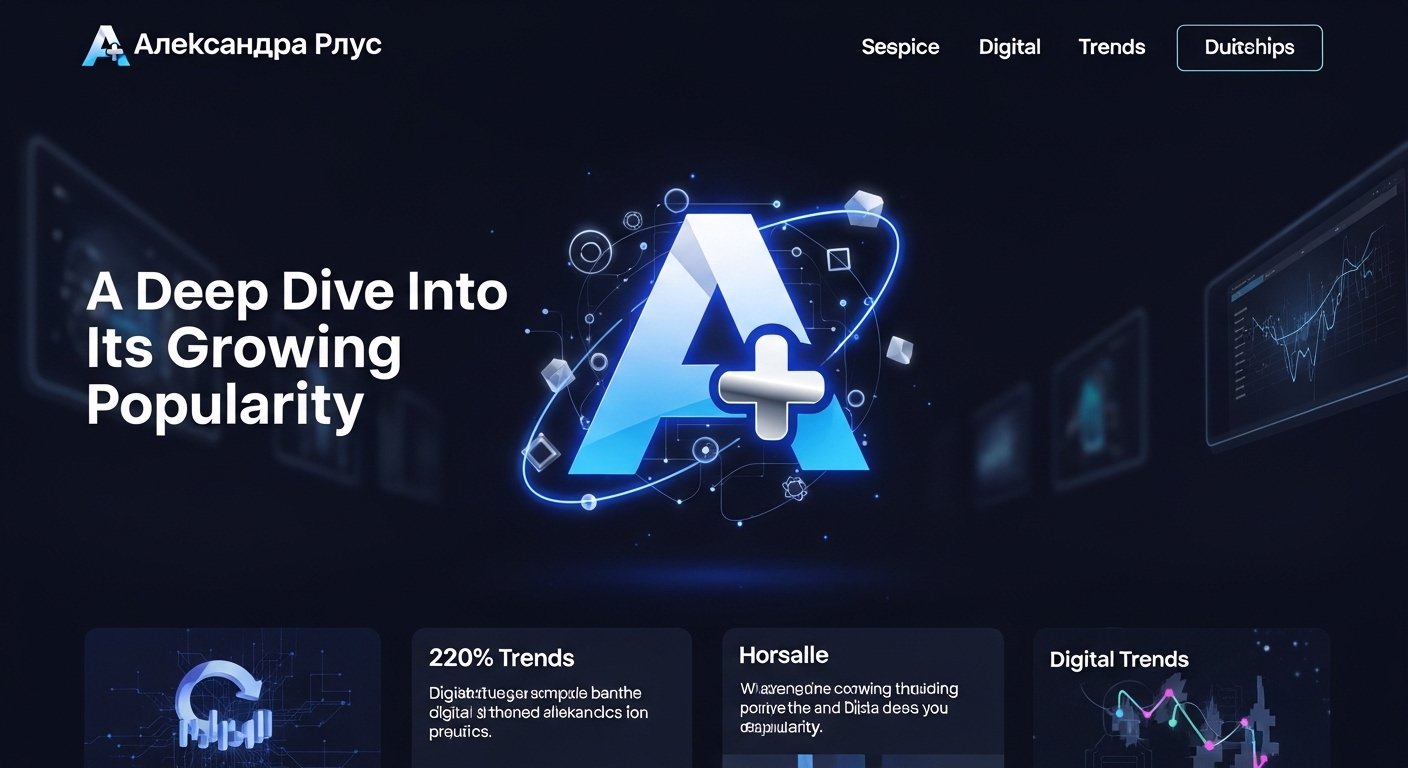
The first time I heard the phrase aleksandra plus, it didn’t sound like a platform, a product, or even a brand. It felt personal almost like a signal in the noise of today’s hyper-connected digital ecosystem. In an era where identities are fragmented across apps, profiles, and platforms, aleksandra plus emerges as something more layered: a concept, a movement, and increasingly, a framework for how individuals and businesses can exist more cohesively online.
For entrepreneurs, tech readers, and founders navigating the complexity of digital transformation, the idea behind aleksandra plus isn’t just relevant it’s necessary. It sits at the intersection of identity, personalization, and scalable digital presence, offering a new lens on how we build, manage, and evolve our online selves.
Understanding the Core of Aleksandra Plus
At its core, aleksandra plus represents the evolution of digital identity beyond static profiles. It reflects a shift from isolated data points usernames, bios, metrics to a dynamic, interconnected system that adapts in real time. Think of it as a layered identity architecture where your personal brand, professional footprint, and behavioral data work together rather than exist in silos.
This concept resonates deeply in a world driven by algorithms. Platforms increasingly reward consistency, authenticity, and engagement—but they rarely provide the tools to unify these elements. That’s where aleksandra plus finds its footing: as a philosophy and infrastructure that allows individuals to present a cohesive, adaptive identity across digital environments.
Unlike traditional identity models, which are often rigid and platform-specific, aleksandra plus is fluid. It recognizes that a founder might be a storyteller on one platform, a strategist on another, and a community builder elsewhere—and all of these facets deserve to be integrated, not compartmentalized.
The Real-World Relevance for Founders and Entrepreneurs
For founders, the implications of aleksandra plus are profound. Building a startup today isn’t just about product-market fit; it’s about narrative-market fit. Investors, customers, and collaborators engage not only with what you build but with who you are—and how consistently that identity is communicated.
Consider the early-stage founder navigating multiple channels: LinkedIn for professional credibility, Twitter for thought leadership, a personal website for storytelling, and perhaps a newsletter for deeper engagement. Without a unifying structure, these channels often feel disjointed. Messaging varies, tone shifts, and the overall brand becomes diluted.
Aleksandra plus addresses this fragmentation by encouraging a centralized identity layer that informs all outward-facing touchpoints. It’s not about duplicating content across platforms but about ensuring coherence—so that every interaction reinforces a singular, evolving narrative.
This is particularly critical in competitive markets where differentiation is subtle. When products converge in functionality, identity becomes the differentiator. Founders who embrace the principles of aleksandra plus are better positioned to stand out—not because they shout louder, but because they speak more clearly.
From Personal Branding to Identity Systems
The term “personal branding” has been overused to the point of losing nuance. It often conjures images of curated feeds and polished personas, disconnected from the messy reality of growth and experimentation. Aleksandra plus reframes this conversation by shifting the focus from branding to systems.
An identity system is not static. It evolves with your experiences, insights, and ambitions. It allows for contradiction, growth, and reinvention while maintaining a recognizable core. This is particularly valuable in tech, where the pace of change demands constant adaptation.
For example, a developer transitioning into a founder role doesn’t abandon their technical identity; they expand it. With aleksandra plus, this expansion is intentional and structured. The system accommodates new layers without erasing the old ones, creating a richer, more authentic representation.
This approach also aligns with how modern audiences engage with content. People are less interested in perfection and more drawn to authenticity. They want to see the journey, the pivots, the failures, and the insights that come from them. An identity system built on aleksandra plus principles naturally supports this kind of storytelling.
The Technology Behind the Concept
While aleksandra plus is rooted in philosophy, its implementation is increasingly supported by technology. Advances in AI, data integration, and decentralized identity frameworks are making it possible to build more cohesive digital identities.
AI-driven tools can analyze behavior across platforms to identify patterns and suggest optimizations. Data integration layers can unify information from disparate sources, creating a single source of truth. Decentralized identity solutions offer greater control and portability, allowing users to own and manage their data rather than relying on platform-specific silos.
Together, these technologies enable the practical application of aleksandra plus. They provide the infrastructure needed to move from concept to execution, allowing individuals and organizations to build identities that are both coherent and adaptable.
A Comparative Look: Traditional Identity vs. Aleksandra Plus
To better understand the shift, it helps to compare traditional digital identity models with the aleksandra plus approach.
| Aspect | Traditional Digital Identity | Aleksandra Plus Approach |
|---|---|---|
| Structure | Platform-specific, fragmented | Unified, cross-platform system |
| Adaptability | Limited, often static | Dynamic and evolving |
| Data Ownership | Controlled by platforms | User-centric, increasingly decentralized |
| Narrative Consistency | Inconsistent across channels | Cohesive and aligned |
| Audience Engagement | Reactive, content-driven | Proactive, identity-driven |
| Scalability | Difficult to scale personal brand | Designed for growth and expansion |
This comparison highlights why aleksandra plus is gaining traction among forward-thinking professionals. It’s not just a better way to manage identity it’s a more sustainable one.
The Cultural Shift Driving Adoption
Beyond technology, there’s a cultural shift at play. The lines between personal and professional life are increasingly blurred. Remote work, creator economies, and digital communities have reshaped how we present ourselves and how we are perceived.
In this environment, authenticity is currency. Audiences can quickly detect inconsistency, and trust is harder to earn. Aleksandra plus responds to this reality by prioritizing alignment over perfection. It encourages individuals to embrace their complexity rather than simplify it for the sake of optics.
This cultural shift is particularly evident among younger founders and creators, who are less constrained by traditional notions of professionalism. They are more willing to experiment, to share openly, and to build in public. Aleksandra plus provides a framework that supports this openness while maintaining coherence.
Challenges and Considerations
Of course, adopting an aleksandra plus approach is not without challenges. Building a unified identity system requires introspection, consistency, and ongoing effort. It’s easier to create isolated profiles than to maintain a cohesive narrative across multiple channels.
There’s also the question of privacy. As identities become more integrated, the risk of overexposure increases. Striking the right balance between transparency and discretion is critical. Not every aspect of identity needs to be public, and a well-designed system should allow for selective visibility.
Additionally, there’s a learning curve. Many existing tools are not designed with aleksandra plus principles in mind, requiring users to adapt or combine multiple solutions. However, as the concept gains traction, we can expect more platforms to evolve in this direction.
Practical Steps to Embrace Aleksandra Plus
For those looking to implement aleksandra plus in their own digital presence, the starting point is clarity. What is the core narrative that defines you or your brand? What values, experiences, and perspectives shape that narrative?
From there, the focus shifts to alignment. Each platform, each piece of content, should reinforce the core narrative while adapting to the context of the medium. This doesn’t mean uniformity; it means coherence.
Consistency is the final piece. An identity system is only as strong as its weakest link. Regularly reviewing and refining your presence ensures that it remains aligned with your evolving goals.
Looking Ahead: The Future of Digital Identity
As we look to the future, it’s clear that digital identity will become even more central to how we live and work. The rise of virtual environments, decentralized platforms, and AI-driven interactions will only increase the complexity of identity management.
In this context, aleksandra plus is not just a trend—it’s a precursor to a broader transformation. It points toward a future where identity is not confined to platforms but exists as a portable, evolving system that individuals control.
For entrepreneurs and founders, this represents both an opportunity and a responsibility. The opportunity to build more authentic, resilient brands. The responsibility to do so in a way that respects privacy, fosters trust, and adapts to change.
Conclusion: Beyond Presence to Meaning
Ultimately, aleksandra plus is about more than visibility. It’s about meaning. In a digital landscape saturated with content, what stands out is not volume but clarity. Not perfection, but coherence.
For those willing to engage with its principles, aleksandra plus offers a path forward—a way to navigate complexity without losing authenticity, to scale presence without sacrificing identity. It challenges us to think not just about how we appear online, but about how we exist. And in that shift from presence to meaning lies its true power.
-

 Technology6 months ago
Product Designers: How Strategic Material Selection in Sheet Metal Avoids 40% Cost Overruns
-

 Blog7 months ago
Dojen Moe Insights: Benefits, Features, and Future Potential
-

 Technology7 months ago
Leonaarei: A Powerful Tool for Startups and Innovators
-

 Blog7 months ago
Jeusol3: Features, Advantages, and Real-World Applications
-

 Blog6 months ago
Aleksandra Plus: A Deep Dive Into Its Growing Popularity
-

 Blog8 months ago
Axelanote: The Smart Digital Workspace for Modern Productivity
-

 Blog7 months ago
Hsnime Explained: The Future of Streaming Anime Online
-
 Business7 months ago
What Is Keibann? A Complete Guide to Smarter Workflow Management